
WELCOME TO CURIO SHOP
Antiques & Interiors
Discover our collection of old world antique furniture, tableware, lighting, & objects from the 17th century to the 1940’s. Every object both great and small has been lovingly hand-selected for its craftsmanship, quality, history, & charm.
†
Our Latest Finds
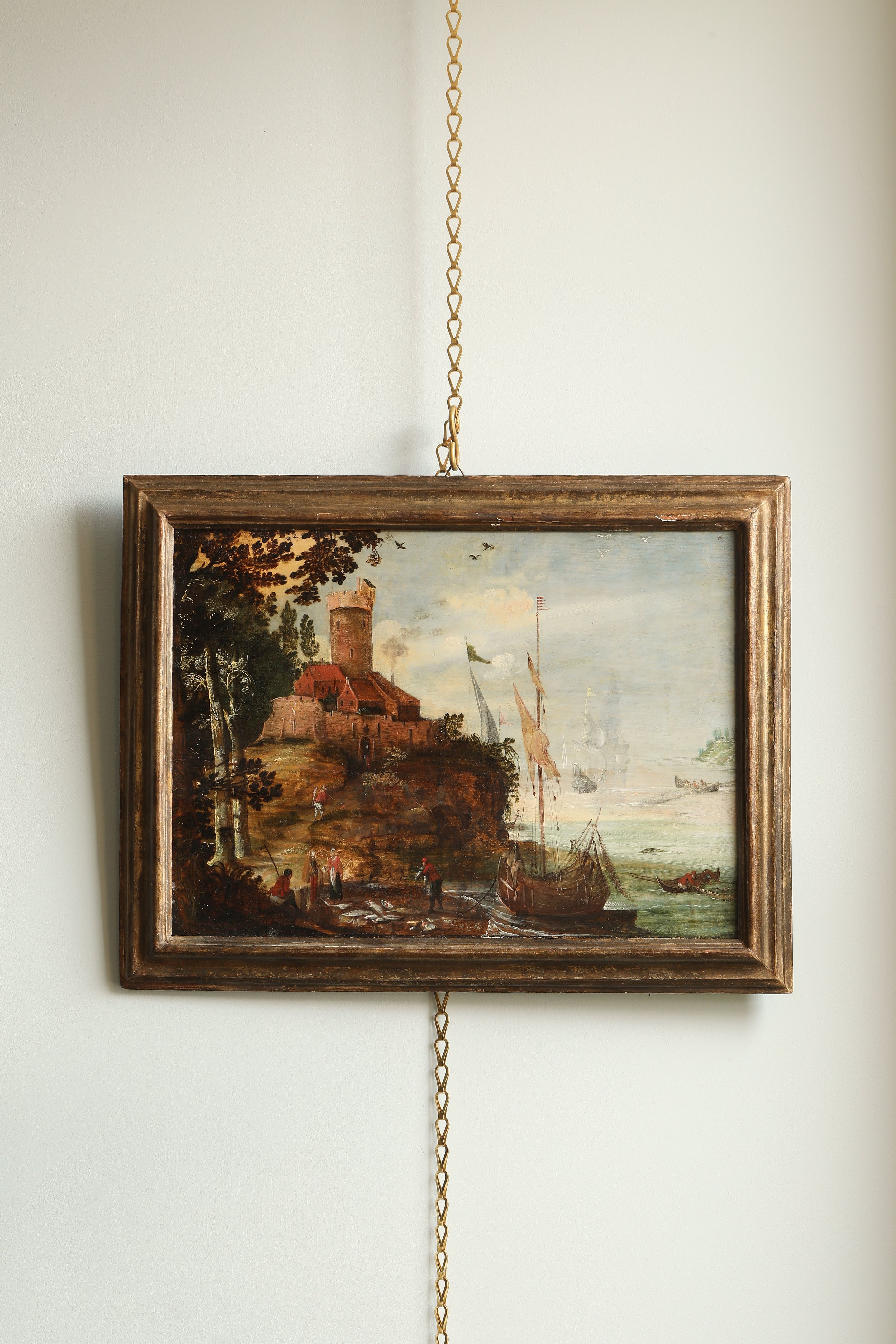
An exceptional 17th century Flemish painting with its original gilded frame. The painting depicts a charming scene of seaside life. In the harbor, small groups of men in row boats cast and bring in their fishing nets. In the foreground, fisherman and villagers gather to assess the morning catch before it is brought up by a servant to the watchtower on top of the cliffside.
With vivid colors and fine brushwork, it is a fine example of Flemish painting from this period and a wonderful addition to any collection.
Dimensions: 22 1/2” L x 17 1/2” W
Condition: Good, recently cleaned with a fresh backing
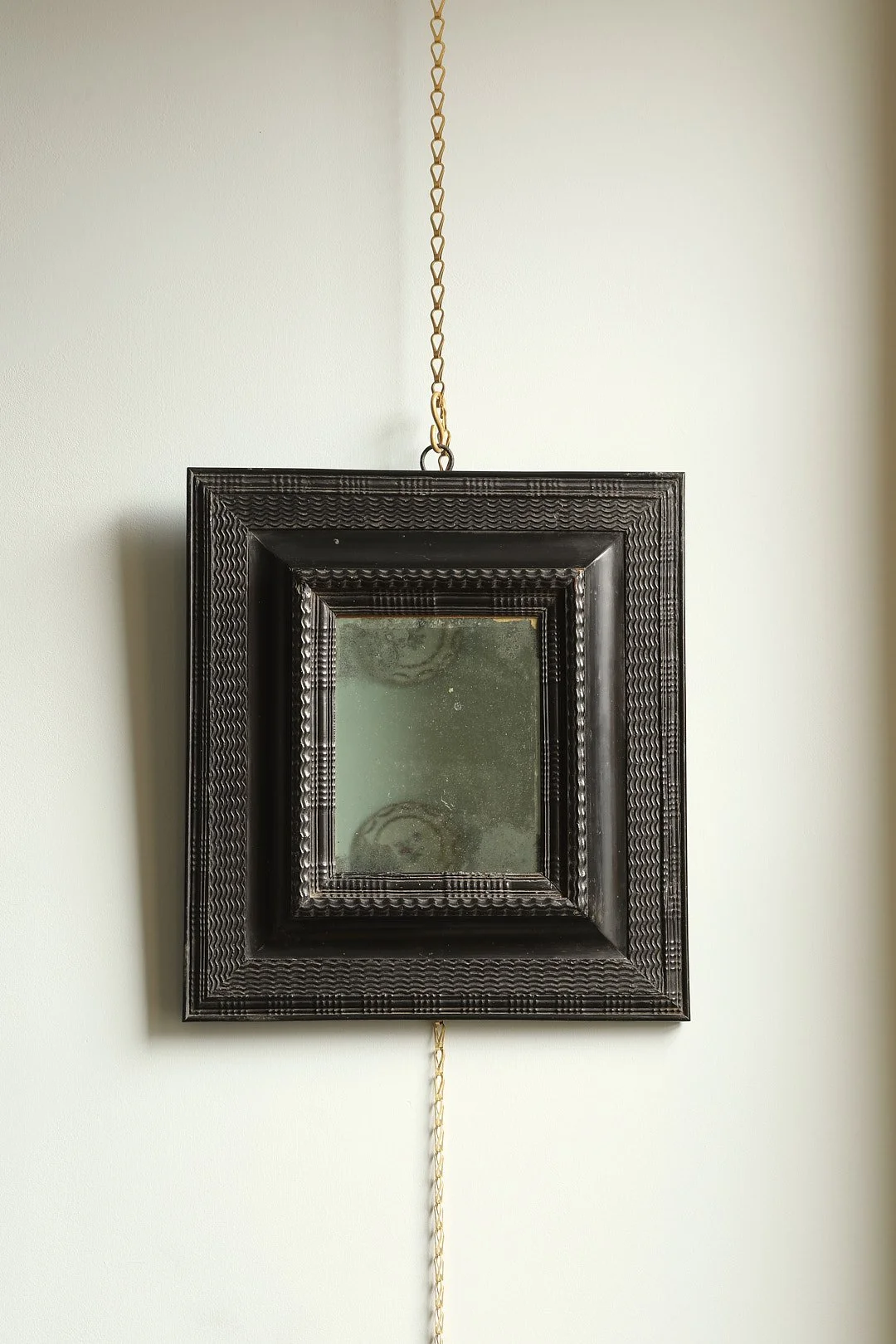
A rare and beautifully proportioned 17th century ebonized mirror with a deep-profile frame accentuated by intricately carved ripple motifs and geometric shapes—characteristic of Italian craftsmanship in the 1600s.
The mirror retains its original mercury glass which has been delicately oxidized over time, giving it a magical quality only possible through the passage of time.
Dimensions: 19 1/4” H x 17 3/4” W
Condition: Very good, wear consistent with age and use.
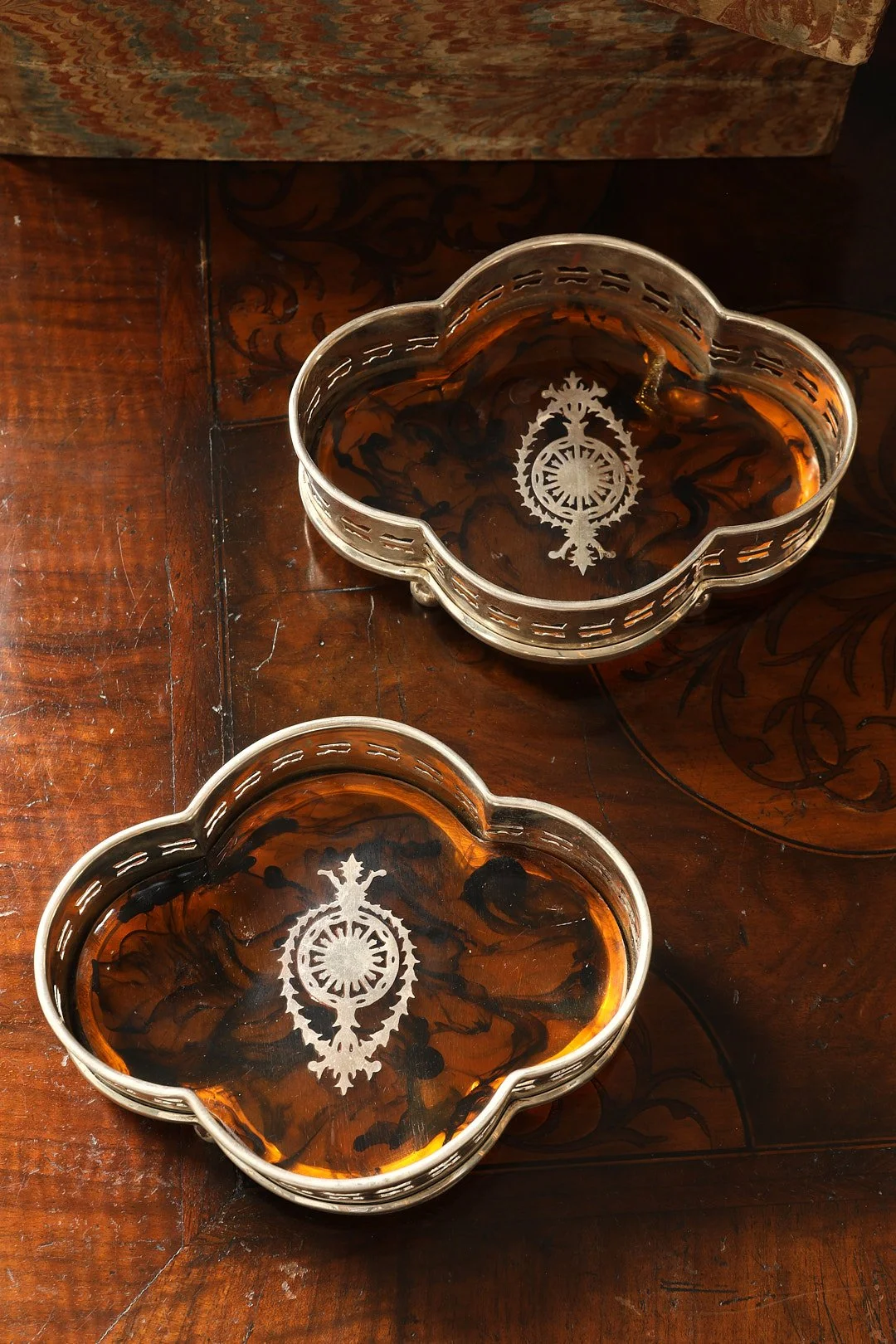
A divine pair of English silver-plated and faux tortoiseshell quatrefoil wine coasters raised on ball feet with pierced gallery edges. The perfect table accessory for your next dinner party or gift for the upcoming holidays.
Dimensions: 6” L x 4/12” W x 2 1/2” D
Condition: Good, wear consistent with age and use
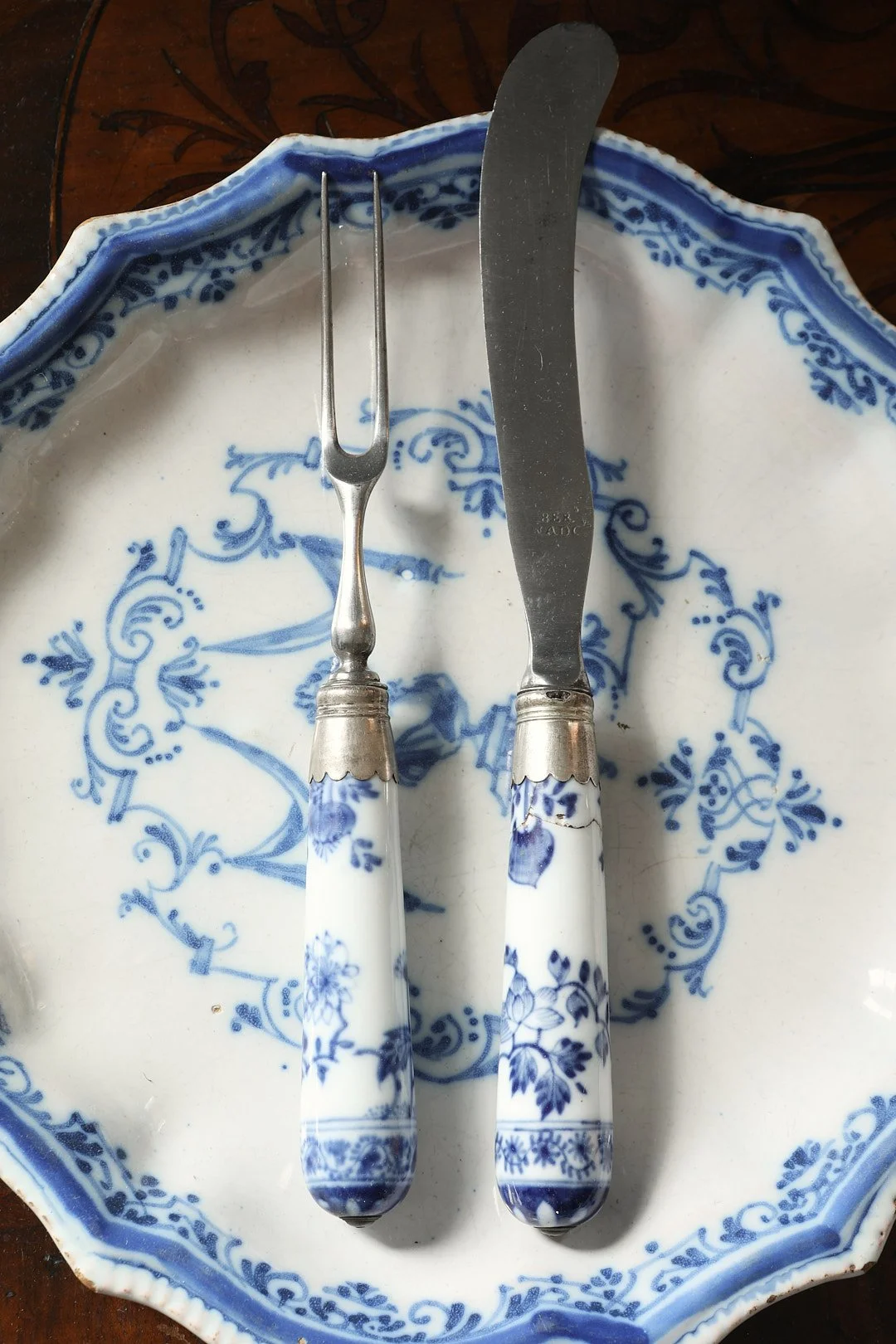
A rare 18th century porcelain knife and fork cutlery set with steel blades and silver ferrules. Originally made for a single place setting, we recommend using now as servingware for charcuterie, fruit courses, and other elegant bites.
Dimensions—
Knife: 8 1/2”L
Fork: 7 3/8” L
Condition: Good, wear consistent with age and use. One small crack on the knife. See photos for details. Priced accordingly.
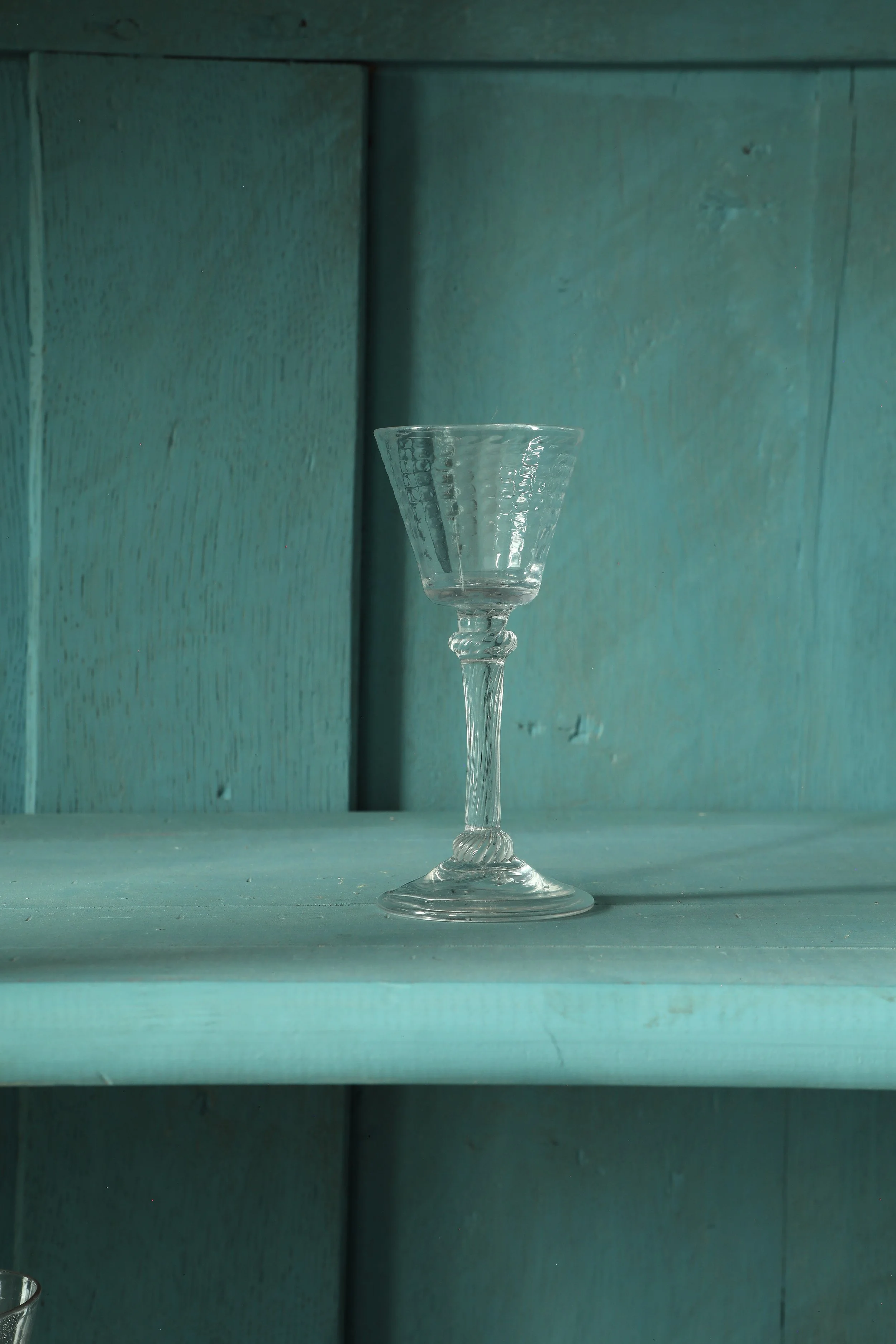
A rare early 18th century wine glass from Liège c. 1720 with a conical with nut moulding, shoulder and basal knops stem, conical and folded foot, and a snapped pontil. Likely from the Nizet glasshouse in Liège from the beginning of the 18th century.
An exceptional glass of very unusual form and an essential for any by the glass collector.
Dimensions: 5 1/8” H x 2 1/8” W bowl
Condition: Excellent
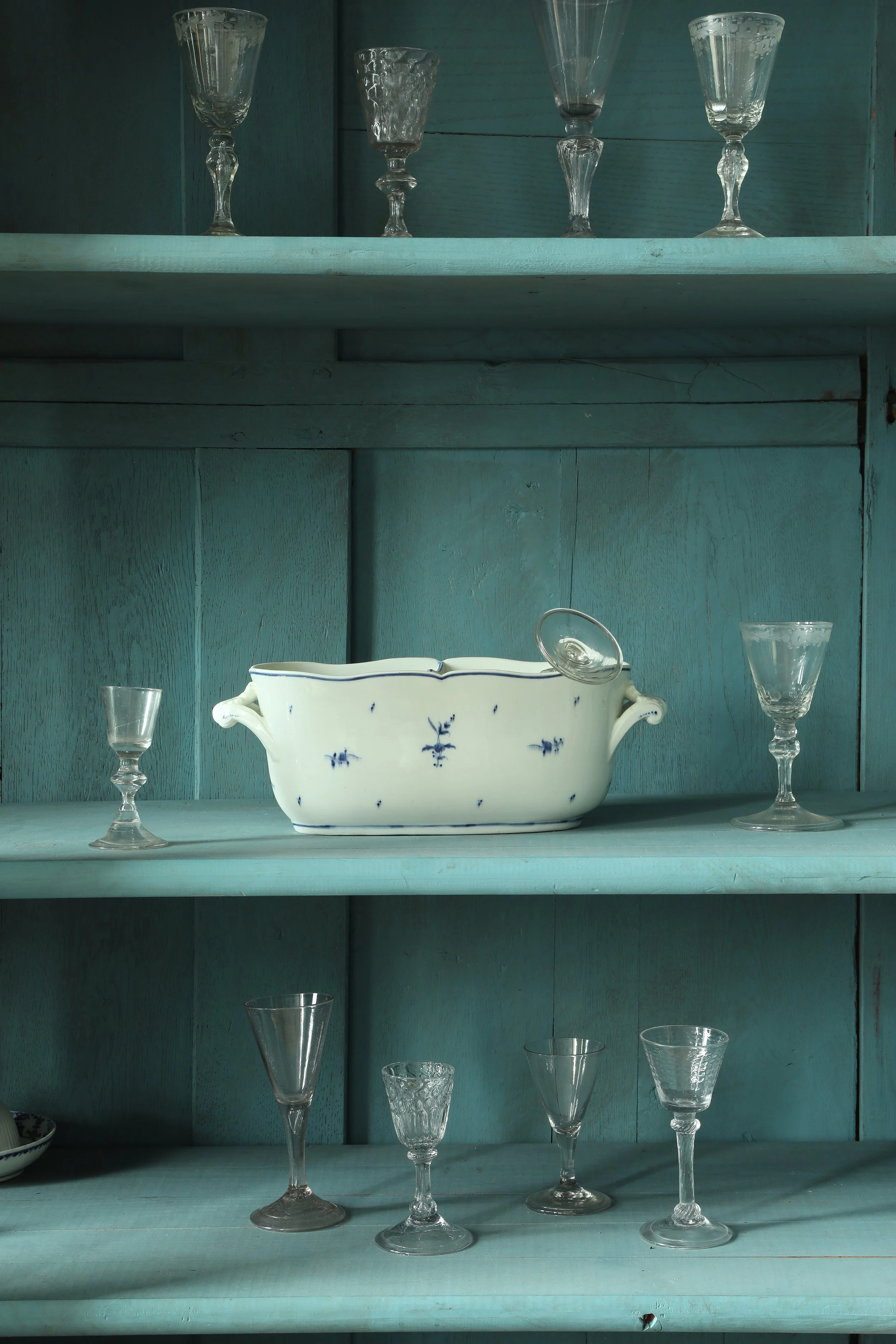
A rare 18th century oval bottle cooler with a central partition in soft paste Arras porcelain with "twig" decoration. Marked AR in blue on the bottom. The Delemer sisters' porcelain factory in Arras only lasted for a short time (1770-1790) and was one of the few all women owned factories in the 18th century in France.
Dimensions: 12” L x 4.33” W
Condition: Very good, slight imperfection on the interior partition from separation during the firing process
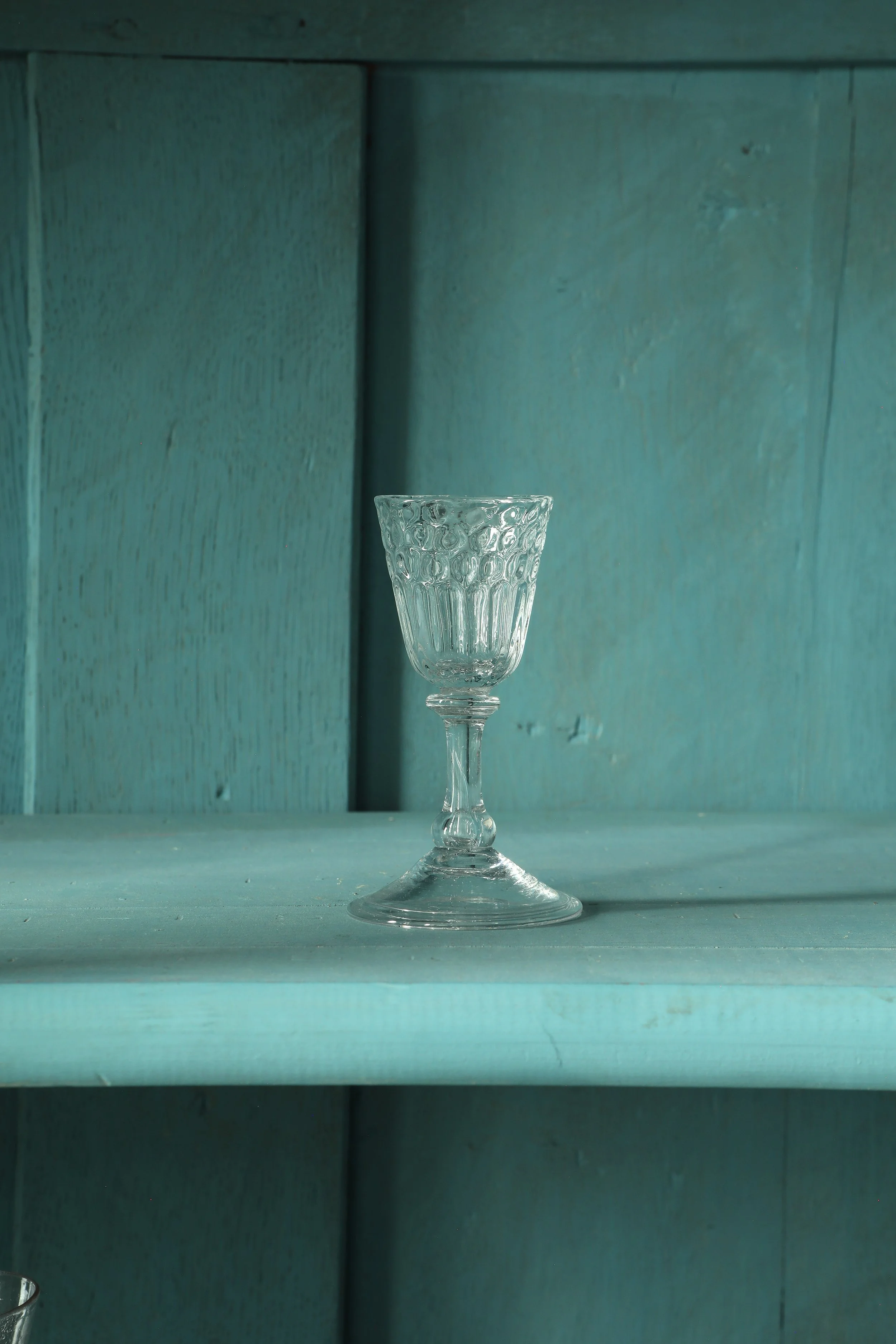
A stunning 18th century wine glass from Liège circa 1720. The glass had a round funnel bowl with strawberry moulding over rib moulding. The hollow stem has shoulder and basal knops atop a conical folded foot with a rough pontil. Likely from the Nizet glasshouse in Liège from the beginning of the 18th century.
An essential for the burgeoning by the glass collector.
Dimensions: 4 1/2” H
Condition: Very good
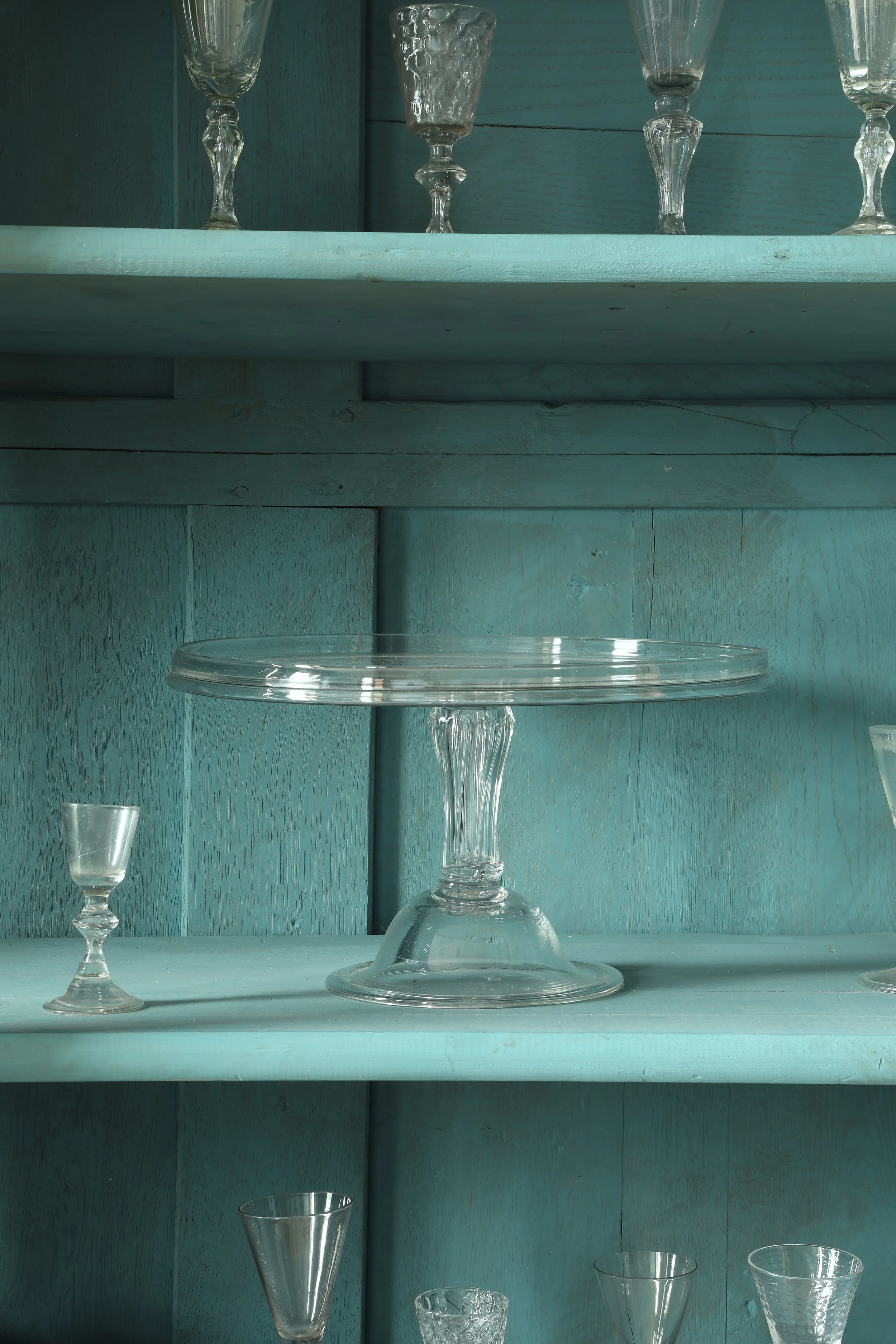
Stunning 18th century Georgian blown glass tazza raised on a folded foot with a Silesian stem of a particularly large size. Use to serve desserts, fruits, nuts, or other bites.
Condition: Perfect
Dimensions: 7 1/2” H, 12” Diameter
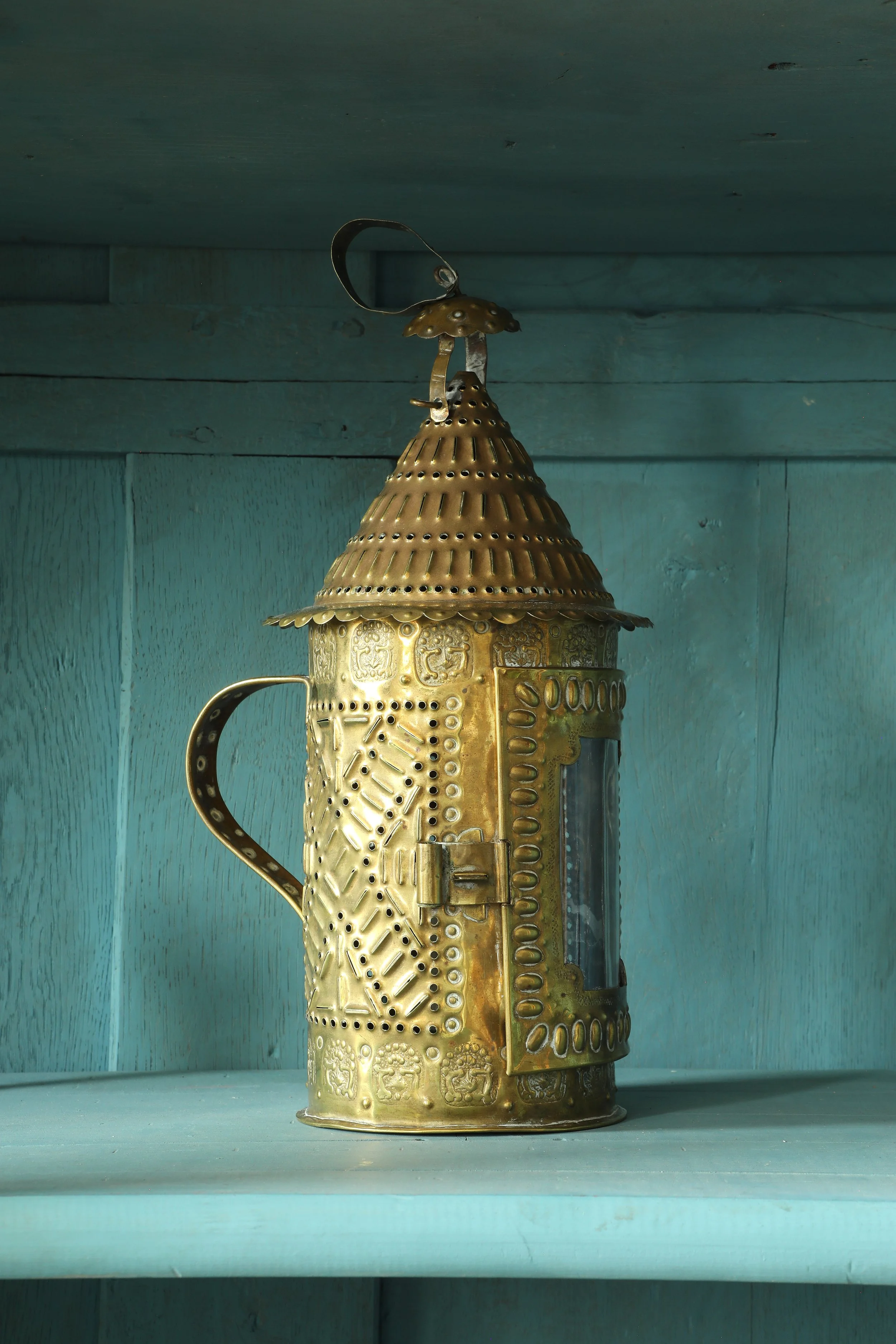
A rare 18th century French lantern of intricately pierced and stamped brass decorations with its original glass front. Due to the level of detail and ornamentation, it was likely made for an upperclass person to use at night. All original components with no signs of restoration and gentle wear.
Dimensions: 13 1/2” H, 5 “ W (at base)
Condition: Very good
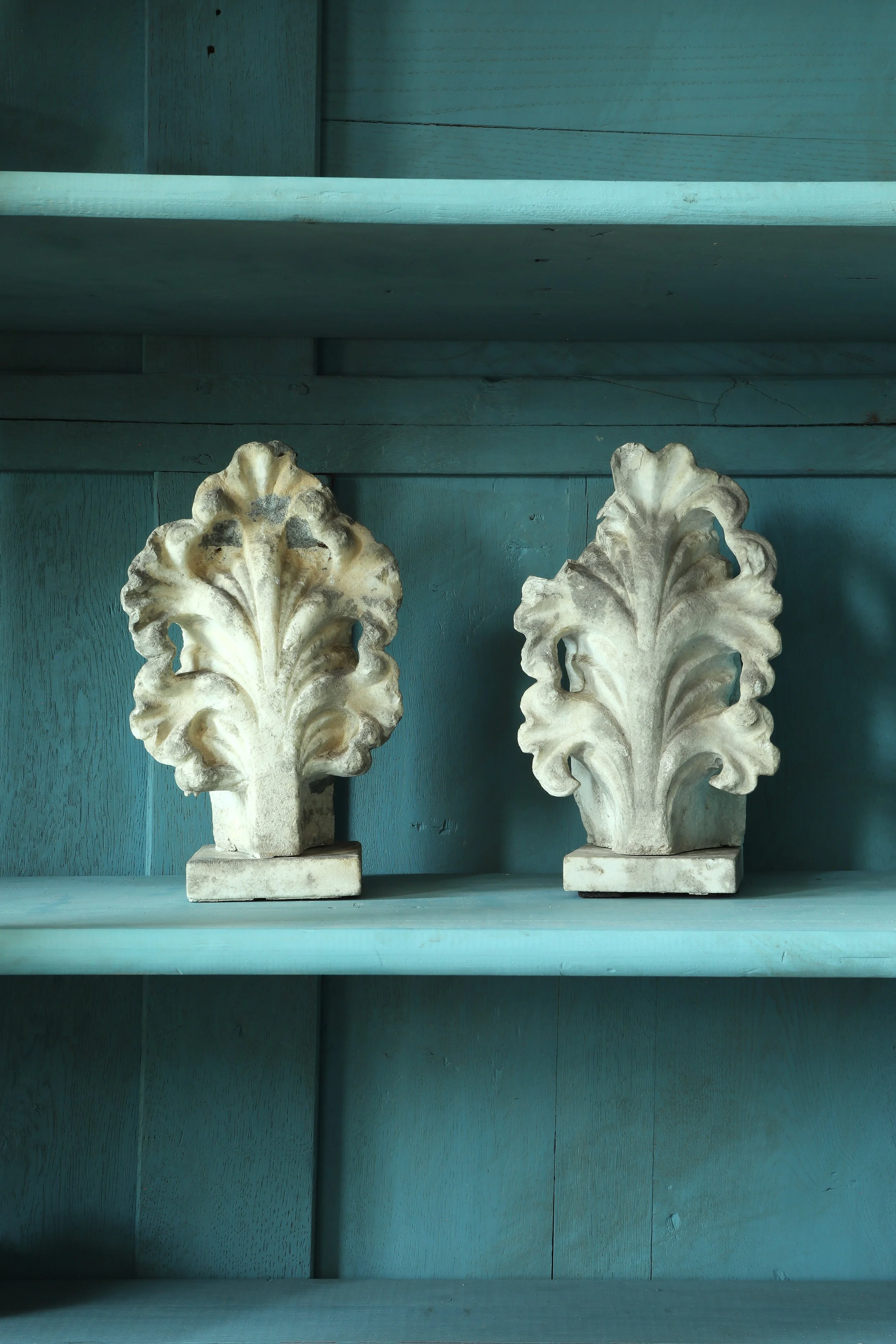
A stunning pair of 16th century Italian marble palmettes or palm fronds from Genoa. Each hand carved as decoration for the interior of a Church or stately home.
Dimensions—
Left: 10 3/4” H x 6 1/2” W 4 3/4” D (at base)
Right: 10 1/2” H x 6 1/2” W 4 3/4” D (at base)
Condition: Good, losses to the marble on the right hand palmette. Wear consistent with age.
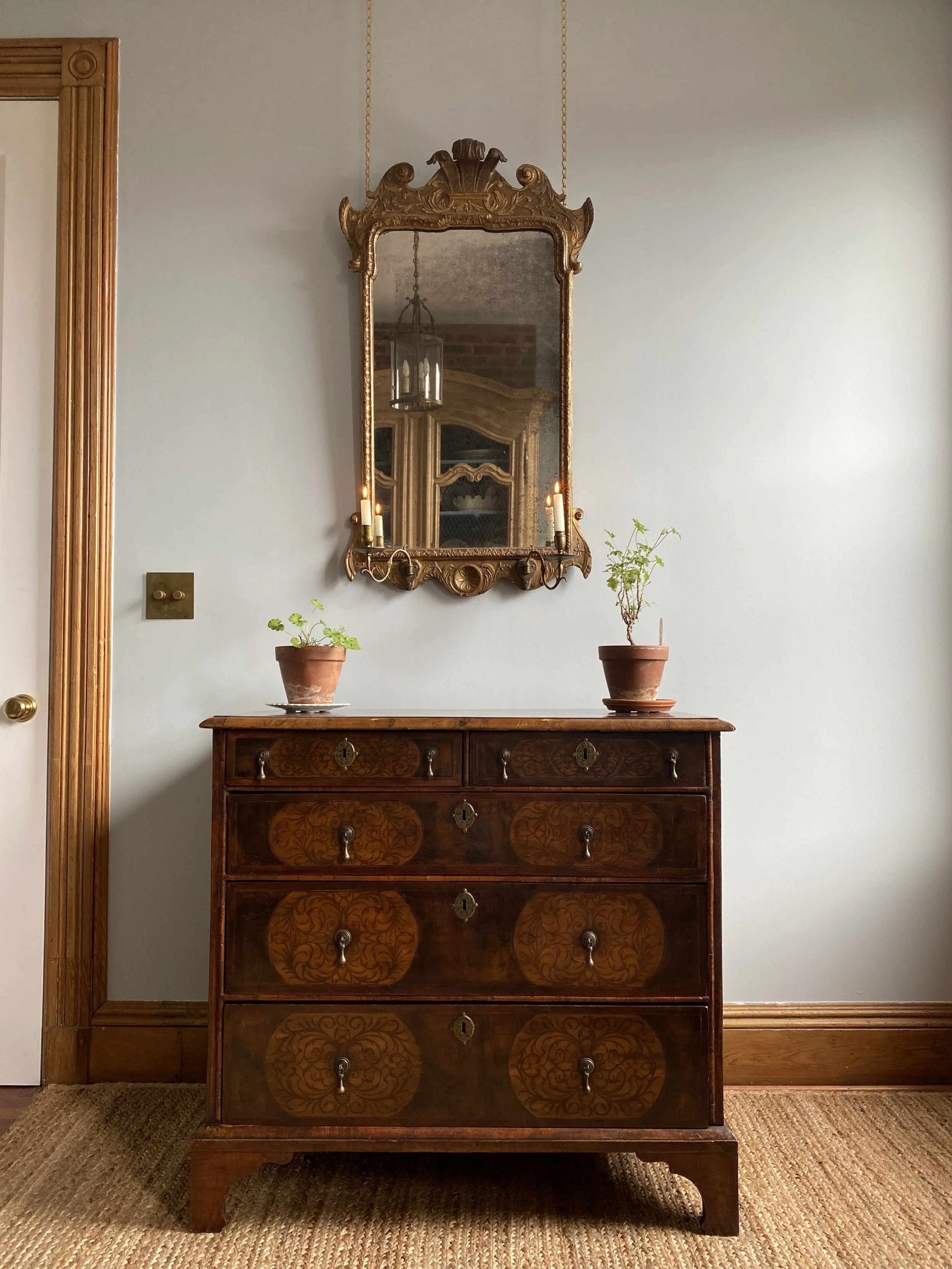
A rare 18th century seaweed marquetry chest of drawers inlaid throughout with finely carved lobed oval panels of marquetry. The chest has two short upper drawers and three long lower drawers on bracket feet.
Dimensions: 36.2” H x 38.98” W x 23.6” D
Condition: Good, age related wear, feet have been replaced. Handles have been replaced with period appropriate hardware.
Seaweed marquetry, also known as arabesque marquetry, is a very fine and delicately scrolled style of symmetrical, foliate scrolls that was popular in England for a short period of time from 1690 until 1715. One of the most difficult and intricate forms of marquetry to produce.
Note—Shipping not included in the buy price. Invoice will be Sent After Purchase. Read below for more details
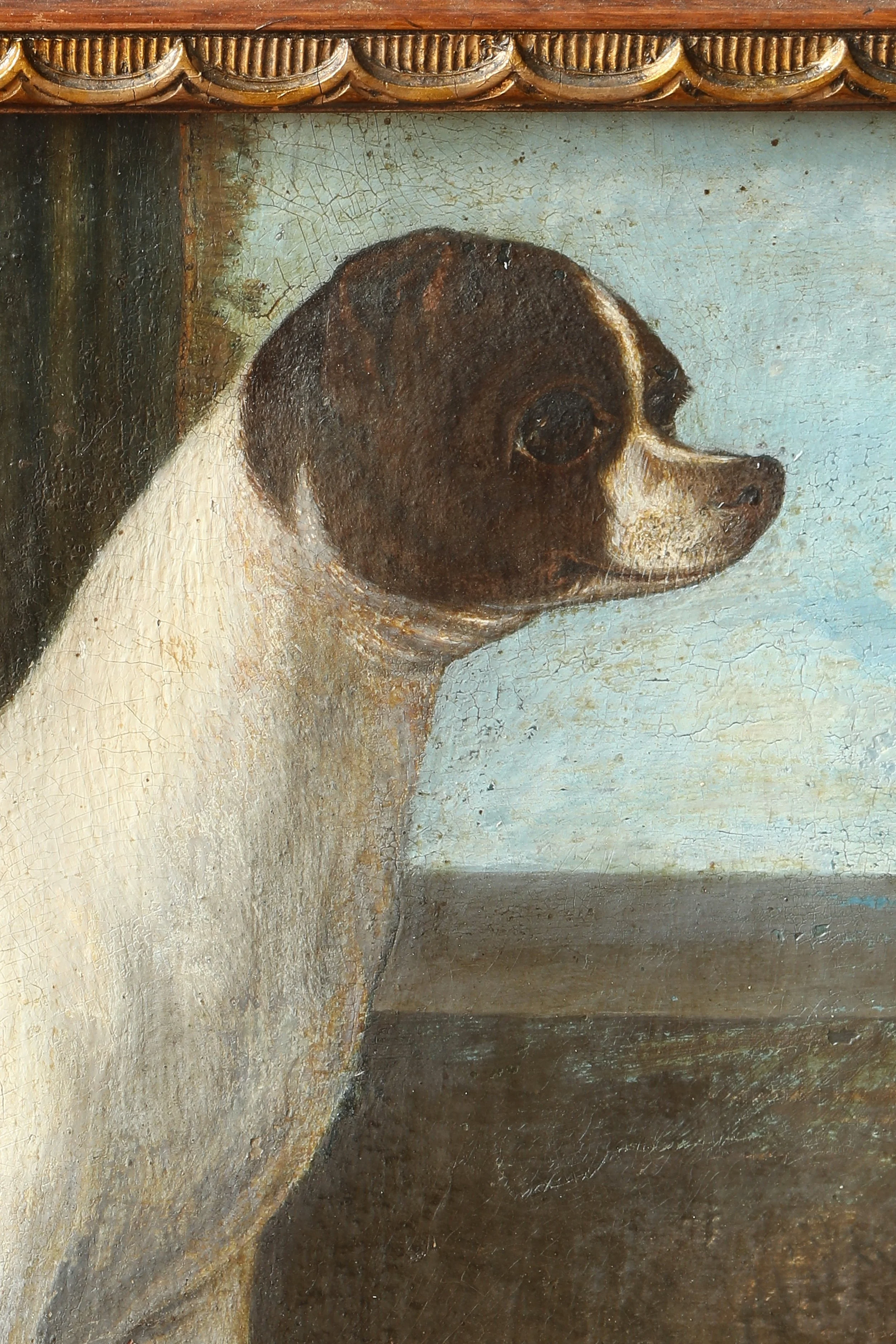
A lovely 19th century portrait of a dog sitting in front of an open window and next to a piece of bread and glass of water. The back of the painting is inscribed (translated from Italian):
“Ferdinando Passeri Modi—In token of my love and gratitude to his chosen one, C. Giuseppe Pasolini, I give this small fruit of my labors. 1823”
The painting is believed to be a portrait of the artist’s dog, made as a gift to his uncle Count Giuseppe Pasolini, who at the time of this painting’s creation was a young child but went on to have an illustrious political career, rising to become the President of the Senate in 1876 before he fell ill and retired.
Condition: Good, wear consistent with age. The painting is not backed and has been fitted into a slightly larger frame.
Dimensions: 23” W x 28.75 L” (including the frame)
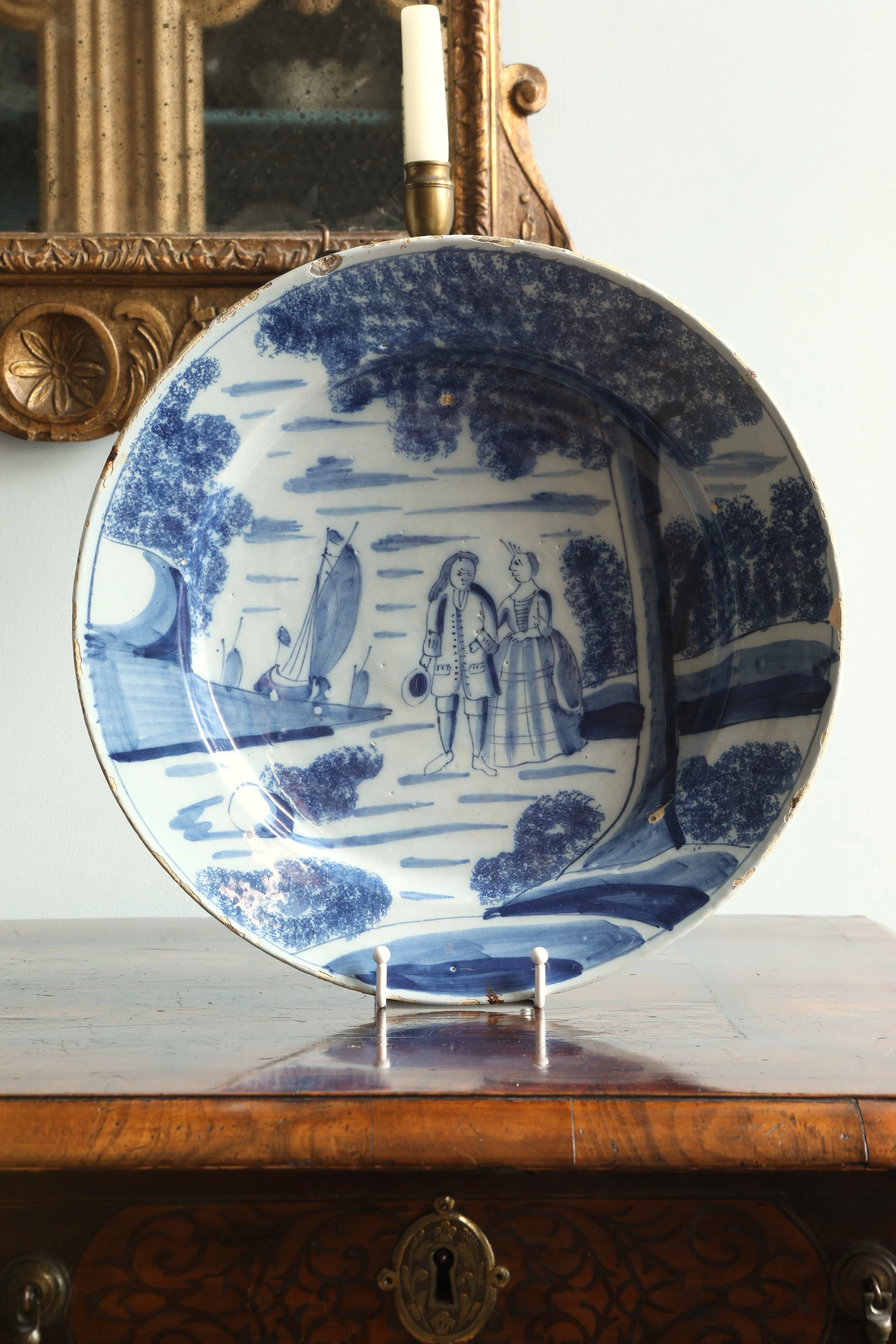
A beautiful, shallow round dish decorated with a scene of a couple strolling along the sea shore. In the style of traditional Chinese porcelain. The bowl is a tin glazed faience from Holland circa 1760.
Dimensions: 13.6” Diameter
Condition: Good, areas with glaze missing and other marks consistent with age and use
Note—Shipping not included in the buy price. Invoice will be Sent After Purchase. Read below for more details
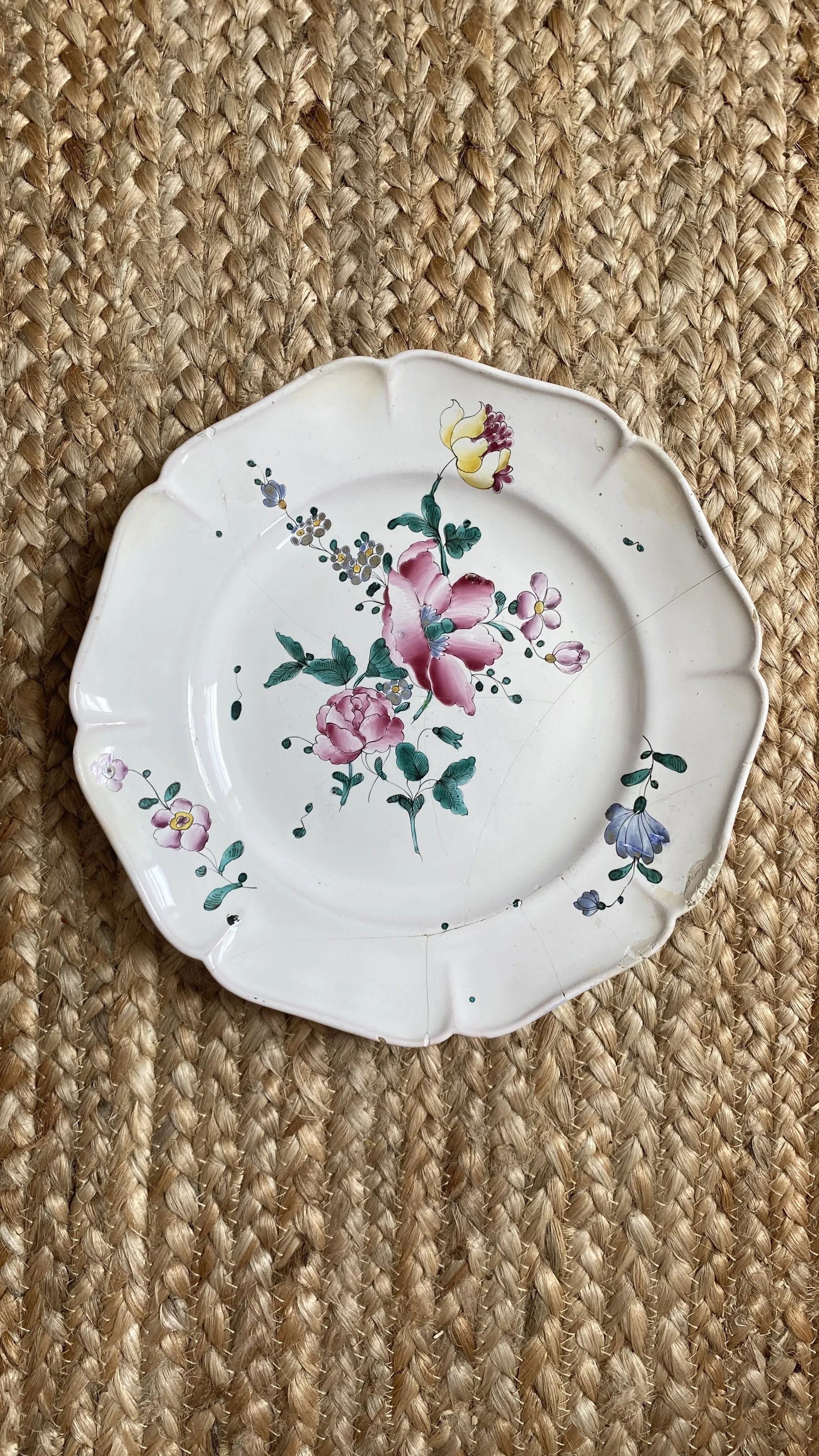
Lively 18th century Strasbourg faience plate signed and numbered by Paul Hannong adorned with hand painted bursts of flowers and scalloped edges.
Dimensions: 9 3/4”
Condition: Old repairs, chips, and cracks. In stable condition.
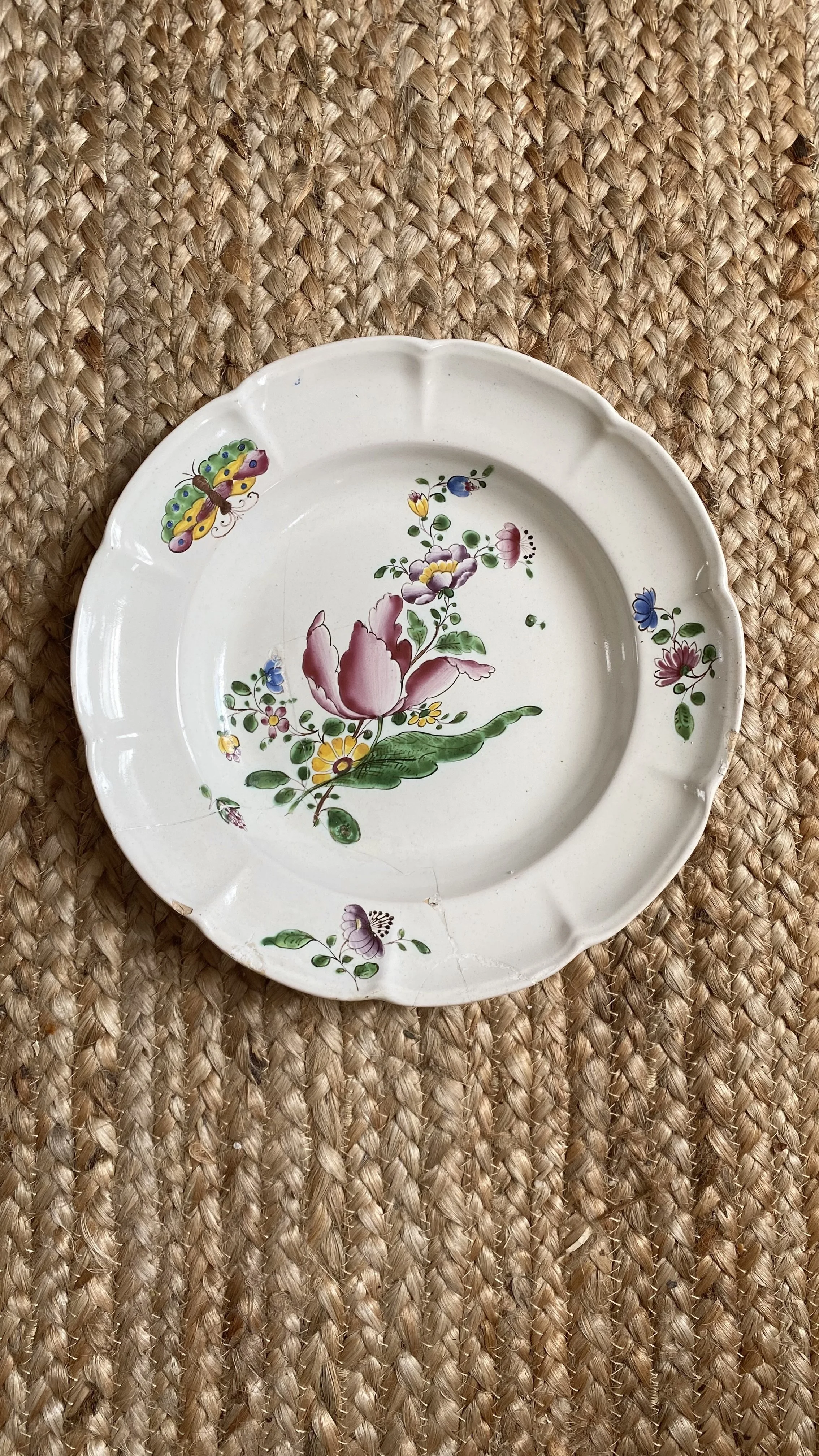
Delightful 18th century Strasbourg Faience soup plate with hand painted floral blooms and a scalloped rim.
Condition: Previous repairs, chips and wear
Dimensions: 10 1/4” Diameter
Lovely 18th century tulip shaped sterling silver cup from France. Marked with the engraved initials of ABFC on the front, likely the initials related to the family or owner. Stamped with the poiçon de charge A mark on the bottom of the cup. Used as a stemless glass or tumbler for wine and other beverages.
Weight: 103.5 grams.
Condition: Very good, wear consistent with age and use.
Dimensions: 4 3/8” H x 3 1/8” W (at top)